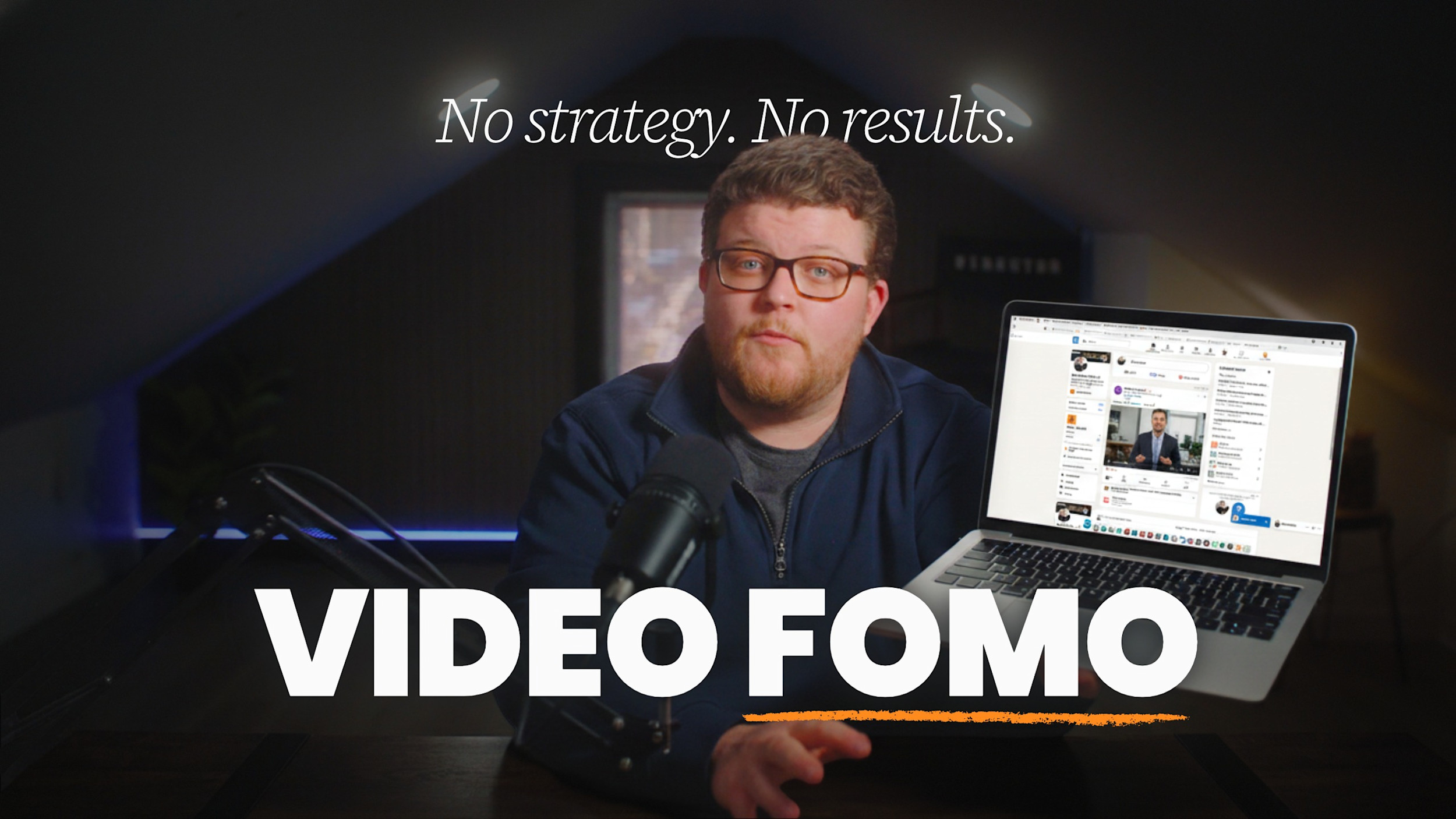

One of the most expensive corporate video mistakes doesn't happen on set. It happens in a planning meeting, when a team signs off on a brand film because a competitor just launched one, before anyone decides what the video is actually for. A good brand video strategy starts with that job: which sales, hiring, or customer goals the video supports, where it fits in your plans for the next year or two, and what happens after launch. Figure out the job first, and production value becomes a real asset. Skip that step, and even a beautiful film turns into a very expensive one-off.
If you work in marketing at a bank, insurer, or wealth firm, you've probably lived this one. You're scrolling LinkedIn and a competitor drops a gorgeous, cinematic brand film. Great story. Big production energy. Very confident. Then someone on your team asks: "Should we be doing that too?"
Totally fair question. It's also where a lot of expensive mistakes start.
The competitor trigger is about risk, not creativity
Nobody's actually losing sleep over the competitor's 8K camera or their sound design. The worry is how they look next to you. In finance and insurance, looking credible matters a lot, so when a competitor suddenly looks more polished or more visible, it can feel like you're losing ground.
That feeling moves fast. Budget conversations speed up, creative ideas start flying, and someone's already emailing production companies. (Hi.) What tends to get skipped is the most important question: what is this video actually supposed to do for the business?
You'd be surprised how often we hear brands say they're making video just to keep up with competitors, with no real plan behind it. Without a clear job, even a beautifully made brand film is really just a reaction to what a competitor did. It might look great on launch day, but it won't necessarily help sales, bring in better hires, or keep clients around.
When brand video actually pays off
Video works, but only when it's woven into how your company actually communicates. The teams that get real ROI from video don't treat it like a campaign accessory. It shows up everywhere.
For finance and insurance marketing teams, that usually looks like this:
Sales uses video to explain complicated products and keep long buying cycles moving.
HR uses it to show what it's like to work there and to attract hard-to-find talent.
Client success uses it for onboarding and education.
Marketing plans for what happens after the launch post, not just the launch post itself.
That's when a video stops being an announcement and starts being something the whole company uses.
Copy a competitor's brand film without that groundwork, and you usually get an exciting launch week followed by a whole lot of nothing. Everyone liked the video, and then it quietly lives in a shared folder forever.
Before you approve the budget, answer these questions
A well-made brand film can absolutely make you look more credible, and in financial services, credibility counts. But looking good on its own doesn't pay for the video.
This is also a real budget decision. As of 2026, our one-off projects start at $15,000 CAD, most land between $40,000 and $70,000, and larger campaigns run $70,000 to $100,000+. That's a serious investment in brand video production, so it deserves more than a gut reaction to someone else's LinkedIn post.
Before the budget gets approved, it's worth working through a few questions:
How will this film help your sales team in real conversations?
Where does it fit in your plans for the next 12 to 24 months?
What happens after launch week?
What does success look like: better leads, advisor recruitment, more engagement, people actually remembering your brand?
How will it reach people beyond your own social channels?
If those are hard to answer, that's a sign the video is a reaction, not a plan.
A good brand video strategy decides what your big flagship pieces are for and how they fit with everything else you make. Without that, video turns into a one-off expense instead of something that helps bring in revenue.
The real risk isn't your competitor
The real risk isn't that a competitor looks a bit more polished this quarter. It's that video isn't pulling its weight across your own company.
The finance and insurance brands that get the most out of video treat it as something they build on, not a one-time event:
Videos are made to be reused.
Distribution is planned, not hoped for.
Teams across the company know when and how to use video.
Our “Moments Matter” docuseries for Equitable is a good example. It was made to support a refreshed brand and build trust with advisors, then kept working long after launch as evergreen content, passing 11.5M+ impressions.
That flips the question from "Should we match their brand film?" to "How's our own video strategy holding up?" It's a much better question, and it usually leads to much better decisions.
So before you copy a competitor's creative, take an honest look at your B2B video strategy. If there isn't really one yet, good news: that's a far more useful place to spend your energy (and your budget).
How does your brand video strategy stack up?
If you're not sure where your team stands, that's exactly what our Video Benchmark Assessment is for. It takes about three minutes, scores your strategy, production, and distribution, and compares your results with other teams in your industry, so you can see where you're strong and where there's room to grow.
Take The 3-Minute Video Benchmark Assessment (free)
Still here? You’ve earned the full video transcript
So you're scrolling through LinkedIn and you see a competitor launch an unreal, high-budget brand film. Your first instinct might be, "Should we be doing that too?" Well, make sure you watch this before doing anything else.
Most marketers feel the pressure to match that new video flash just to stay in the game. The thing is, high production value is an incredible asset, but only if it has a job to do. If you're creating video just because of FOMO, you've lost the plot.
My name is Brandon. I've spent the last 12 years working with B2B finance and insurance brands on their video strategy and execution, and I've seen firsthand that the most expensive mistake you can make is creating video just to keep up.
Video is a smart investment. According to WebFX, companies using it grow revenue 49% faster. But for that to happen, video has to live in your brand's DNA, not just on the social feed. That means leveraging it in every aspect of your business.
The average person watches 19 hours of video every week, and video content is 60,000 times more memorable than text. That should be the only justification you need to stop making video a reactive task and start building a robust video strategy that can be leveraged across sales, HR, and customer success. Then tie those videos to business outcomes that matter and boom! Watch your results take off.
You'd be surprised at how often I hear brands say they're creating video just to keep up with competitors, with no real strategy to back it. The real FOMO shouldn't be what your competitor's posting. It's the revenue you're leaving on the table without a unified strategy.
If you want to see exactly how your video marketing plan stacks up against competitors in your industry, take our Video Benchmark Assessment. It only takes three minutes, and you'll get a video maturity score across strategy, production, and distribution. And on top of that, you'll get a tailored plan that reveals your top growth opportunities. Link is in the post above or the description below.