A good corporate interview video comes down to three decisions you make before anyone turns a camera on: what you want your executive to say, how you'll ask for it, and where you'll film it. Get those right and the shoot mostly takes care of itself.
If you're a marketer about to put your CEO, a VP, or one of your in-house experts in front of a camera, this is the technical side of the job. Video production companies like us film these all the time, so here's what we've picked up along the way. For the delivery side, like what to do with hands and eyes once the camera's rolling, see our post on how to look natural on camera.
Write the script before the questions
It feels backwards, but decide what you want your executive to say before you write a single question. Point form is plenty. Nobody's grading your grammar.
This keeps every question tied to a purpose, and it keeps your video from running long. If your point-form notes take about three minutes to read out loud, expect your executive to take about 40% longer in our experience. People like to talk, and experts like talking about their expertise most of all.
Say you want a 30-second video on why your new client portal is easier to use. That's roughly 10 seconds to introduce the speaker and topic, and 20 seconds on one clear reason. One. Your executive probably has five and will want to share all of them, which is exactly why the script comes first.
Write questions that sound like a conversation
The Five W's (who, what, where, when, why, and how) are a solid way to gather information, but they don't always produce the most engaging answers. You also don't have time to cover everything, and you don't need to.
Write questions that lead toward your scripted points and leave room to wander a little. Sometimes your executive says something better than what you planned, and you'll want the space to keep it. Gently nudge them toward your points and keep the whole thing feeling like a conversation. A bright light and a microphone are intimidating enough without the questions feeling like a cross-examination.
A handy rule of thumb: two to three questions is about the most you can fit into a one-minute video. That's 15 to 20 seconds per answer, plus 5 to 10 seconds at the end for a call to action and logo animation.
Skip the memorizing
We get asked all the time whether executives should memorize their answers, and the answer's always no. Sharing the questions ahead of time is fine, even helpful. Just tell your executive not to rehearse word for word. If they know the subject, the answers will come. Memorized answers tend to sound robotic, flat, or a little stiff, and a raw, honest response carries far more feeling.
One tip to pass along: ask them to start each answer with a full sentence that includes the question for context. "Our client portal saves your team time because..." works in an edit. "Because it saves time" doesn't, once the question's been cut out. Viewers won't hear the question being asked, so without that context your editor will struggle to tie the story together, and your audience ends up confused.
Choose the room before you book it
It's tempting to block off the boardroom and call it done. Before you do, check four things. Your production partner knows what their setup needs, so loop them in early.
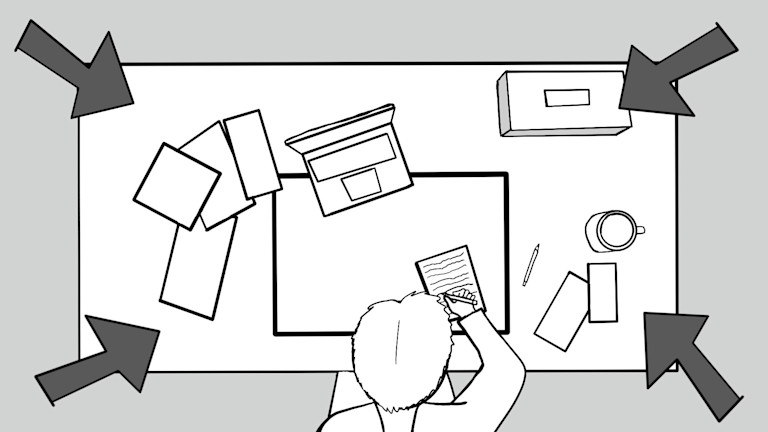
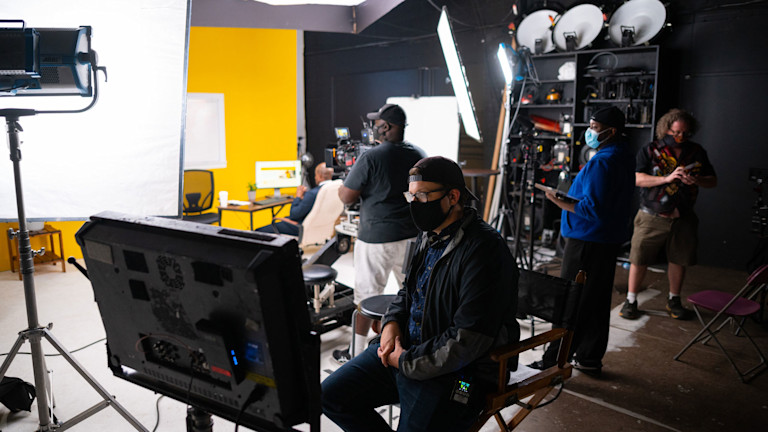
Space. Lights, stands, cameras, tripods, sliders, audio gear, cables, and a crew take up a lot of room. Add a big boardroom table and it gets tight fast.
Lighting. Big windows can cause reflections and uneven light. There are ways around it, but it's worth planning ahead.
Sound. Microphones hear everything we've trained ourselves to ignore, like the AC kicking on or coworkers celebrating something on the floor above.
Relevance. Will the space look good on camera, and does it suit what your executive is talking about? More space generally looks better.
Then scout it. About a week before the shoot, stand in the room and ask yourself:
Can I hear any background noise that could be distracting?
Is this a high-traffic area at any point in the day?
How much natural light does the space get?
Are there power outlets for lights, cameras, and audio gear?
Will this space look good on camera?
Line up a backup plan too, in case something goes sideways on the day. Your executive has enough to think about without the AC unit joining the interview.
Common questions
What should my executive wear?
Solid, warm colours work best, either neutrals or a bit of colour depending on their style. Skip stripes, glossy colours, and thin plaid, which can look distorted on camera. Most important, they should be comfortable, because comfort always shows. Our post on how to dress for an interview video has the full rundown.
What if my executive is nervous on camera?
It's normal, even for someone who presents to boardrooms every week. Cameras are forgiving, though. We can do ten takes and edit the best moments together so it sounds totally natural, so nobody has to nail it on the first try. A good production partner will help your executive settle in and draw out their best answers. For tips your executive can use on their own, send them to our post on how to look natural on camera.
Do we need a production company, or can we film in-house?
You can film in-house, and many teams do. A production company is worth bringing in when the video matters more, like when it's going on your homepage, into sales conversations, or into a campaign. They bring the cameras, lighting, and audio, and usually help you find the right location too. If you're weighing the budget, we break it down in What B2B Video Actually Costs.
Got an executive interview coming up and want a second set of eyes on the script, the questions, or the room? We're always happy to talk video.
 Book a call