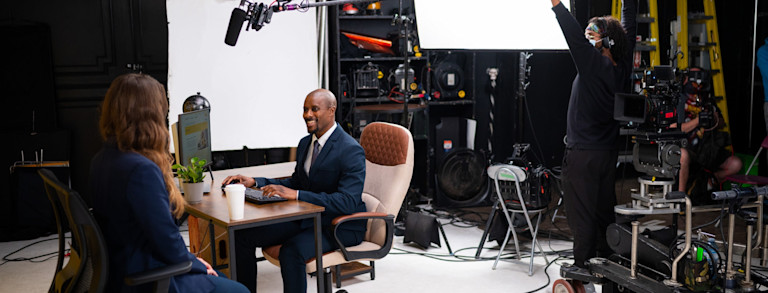
Most one-minute B2B videos we make cost between $15,000 and $100,000+ CAD (as of October 2026). Length plays a part in where you land in that range, but the type of video plays a much bigger one. Repurposing footage you already have sits at the low end, then stock-based videos, interviews and case studies, and 2D animation, with live-action commercials at the top. Within each type, the concept, the crew, the locations, and how many times legal wants to see the cut all nudge the number.
Budgeting for a whole campaign or a year of content instead of one video? Our guide to what B2B video actually costs is the one you want. Then come back here for the per-video detail.
Why video length isn't the main price driver
Length does affect what a video costs, but the type of video and how complex it is affect it far more. A longer video usually means a longer script, more shooting hours, and more time in the edit. Even so, a minute of one type of video can cost several times a minute of another.
We get why people ask. Pricing video by the minute feels as logical as a parking meter. It just isn't the whole story.
Our favourite way to explain it: a 10-second spot with a helicopter and explosions will cost far more than a five-minute interview. Specialized crew, locations, props, and a pilot who has a lot of questions about where the explosions are going all add up fast, even when the finished video is over before your coffee cools.
The flip side is good news. The same variables that push a budget up can bring it down, so a great commercial doesn't need a giant budget. (Ditching the helicopter is usually step one.)
Here's where length does show up on the invoice:
Scripting.
A longer video needs a longer script, and more lines for everyone to review.Shooting hours.
More to capture usually means more time on set and longer crew days.Editing.
More finished minutes means more hours in the edit suite.Animation.
Every second has to be designed and animated, so this is the one place where length and cost really do move together.Versions.
Captions, French versions, and a cut for every platform your social team has opinions about.
One-minute video cost by type
Here's how the main types of one-minute video compare, from lowest to highest cost, within our typical range of $15,000 to $100,000+ CAD.
Video type | Where it usually lands | What drives the cost | Best for |
|---|---|---|---|
Repurposed content | Lowest | Editing time, how much footage you already have | Social, email, keeping content flowing between shoots |
Stock footage and motion typography | Low | Stock licensing, design, editing | Text-driven stories, simple messages, visuals you can't easily film |
Interviews and case studies | Middle | Scripting, crew, location, travel, graphics | Thought leadership, testimonials, internal comms |
2D animation | Middle to high | Motion designer experience, style (especially characters), length | Explaining products, software, complex ideas |
Live-action commercial | Highest | Shoot days, crew size, talent, locations | Brand awareness, campaigns, emotional connection |
Repurposed content
Repurposing is the most budget-friendly way to get more video, because the footage already exists. You've paid for it once. You might as well get your money's worth.
It can mean cutting a highlight reel from footage shot for other projects, or turning the phone video someone took at your last event into a week of social posts. (Yes, even the slightly shaky one.)
In the example above, we edited social content for the Accelerator Centre, pulled from the longer Jumpstart video we made for them. We'll admit to being a little obsessed with repurposing. It keeps content moving when filming isn't an option, and it's the easiest way to show your VP that the last shoot is still paying for itself.
Stock footage and motion typography
Stock and typography videos are strong value, as long as you're OK with footage that wasn't shot just for you. You might not get the exact sunrise you pictured, but you've got most of the world's sunrises to pick from.
They're especially good for text-driven stories: stock footage moving in the background, music underneath, and on-screen text carrying the storyline. No interviews, no actors, and nobody has to remember their lines.
Stock clips typically run $100 to $250 each, so a 30-second video can need $1,500 to $2,000+ in stock alone. That sounds like a lot until you price out filming a waterfall in South Africa. The flights alone would blow past it, and that's before anyone unpacks a tripod.
The licensing catch nobody mentions. More and more stock sites now sell subscriptions, where a monthly fee gets you the whole library. With some of them, your licence only covers you while the subscription is active, so if you stop paying, the stock footage in your published videos may no longer be licensed. Others keep you covered for good on anything you published while you were a member, and sometimes it comes down to which plan you're on. As of October 2026, for example, Storyblocks only includes that lifetime coverage on its Business licence, not its Individual or Small Business plans. Check the licence terms, and the plan tier, before you build a video on it. For a regulated brand, an expired licence on a video that's still live is exactly the kind of thing legal finds at the worst possible moment.
Interviews and case studies
Interview videos sit in the middle of the range, and the budget mostly depends on scripting, location, travel, graphics and animation, interview length, and music licensing. They're the workhorse of B2B video: thought leadership, testimonials, case studies, and internal comms.
Yes, there's a system for scripting interview videos. Asking 20 questions and hoping for the best isn't it. A good interview script means fewer "could you say that again, but shorter?" moments on set, less time in the edit, and a better message at the end of it.
If you're in a regulated industry, this is also where compliance comes in. Anything said on camera may need sign-off before it goes live, so build those review rounds into the schedule from day one. Otherwise they become the reason your launch date quietly slides into next quarter.
2D animation
Animation costs come down to the motion designer's experience, the animation style, and the length, because every second has to be scripted, storyboarded, designed, animated, and sound designed. It's our go-to for explaining products, untangling complicated ideas, and walking people through a platform without putting them to sleep.
Characters are where animation budgets climb fastest. A lot of motion designers charge more for character design and development, because people and faces have far more moving parts than icons and shapes. Every blink, hand gesture, and head turn is something someone has to animate.
Animation works especially well for software companies launching something new. Screenshots age about as well as milk: the moment your product team ships a redesign, every screen in the video is out of date. We design a simplified graphic version of your platform instead, so the video keeps working through the next update, and the one after that.
Live-action commercials
Live-action commercials sit at the top of the range because they usually need multiple shoot days, a larger crew, and the most moving parts. They also leave the most room for imagination, which is a polite way of saying they vary the most in budget.
They cost more, and they earn it. Live action is the strongest tool you've got for building awareness and getting people to actually feel something about your brand. Our "A New Look" video for Linamar became their most-watched video, outperforming their other uploads by 500% to 3,000%.
And again, a great commercial doesn't need the helicopter. Tell us your budget, and we'll build a concept that fits it, not the other way around.
What else moves the price
Within any video type, a handful of decisions move the budget up or down:
Concept.
The bigger the idea, the more it takes to pull off. Big ideas are great. They just aren't free.Crew and shoot days.
The biggest jumps on live-action work. Every extra day means more people, more gear, and more lunches.Locations and travel.
Each new location adds logistics, scheduling, and at least one producer refreshing the weather app.Talent and usage rights.
Professional actors come with licensing terms based on where the video runs and for how long.Animation style.
Clean motion graphics and character animation are very different amounts of work, and characters usually cost more.Music and stock licensing.
Royalties and subscriptions add up, and the fine print matters (see the stock catch above).Review rounds.
Legal and compliance review adds time, especially in finance and insurance. Plan for it and it's just part of the process. Skip that step and it becomes a surprise nobody enjoys.Versions.
French language versions, captions, and platform cutdowns each add time in the edit.
Getting more than one video from a shoot
The easiest way to lower your cost per video is to plan more than one video from every shoot. A one-minute interview can also break into four 15-second clips for social, so one shoot becomes five videos and a few weeks of content you don't have to think about.
Planning more than one video?
Per-video pricing only gets you so far if you're planning a campaign or a full year of content. Our guide to what B2B video actually costs breaks pricing down by project scope. And if you're weighing whether to build a team internally instead, our in-house vs. video agency decision matrix walks through the trade-offs.
Frequently asked questions
Does a 30-second video cost half as much as a one-minute video?
Usually not. Most of a video's cost sits in planning, crew, and the shoot, and those don't shrink in proportion to runtime. A shorter video can save some scripting, shooting, and editing time, but the savings are rarely half.
Is animation cheaper than live action?
Often, but not always. A simple 2D animation usually costs less than a multi-day live-action commercial, while character-driven or highly detailed animation can cost as much as a shoot. The motion designer's experience, the style, and the length decide where it lands.
Does AI make video cheaper?
Not necessarily, but it makes your budget go further. As of 2026, we use AI tools every day for behind-the-scenes work like cleaning up audio, fixing interview hiccups, and colour-matching cameras, which makes us about 10× more efficient than we were five years ago. We pass that on as more videos for the same budget. AI doesn't replace a production team or the creative judgment behind a B2B video. Here's our full take on AI video production.
Can you make a one-minute video for under $15,000?
As of October 2026, our one-off projects start at $15,000. If your budget is smaller, repurposing footage you already have is usually the best value. For a quick one-off social clip, a freelancer may be a better fit than an agency.
Whatever the length, the right budget is the one that matches what the video needs to do. Tell us the goal and the number, and we'll show you what it can do. Helicopter optional.
 Book a call