
The smoothest video approval process gets leadership to sign off on three things before anyone picks up a camera: the concept, the script, and the storyboard. After that, they see the finished video at the end, and not much in between. When the first thing leadership sees is the "final" cut, their feedback jumps from details to strategy, and that's when timelines and budgets start to slip.
After over a decade making video with finance and insurance teams, we've noticed the smoothest projects aren't the ones with the fewest edits. They're the ones where leadership weighed in at the right moments. Here's which moments matter, and what you can safely keep off their plate.
Why final-first reviews go sideways
When leadership sees a finished video they weren't part of building, they review it at the highest level. They're asking the big questions:
Is this the right message?
Is this the right positioning?
Is this the direction we want to go?
Good questions. Just very expensive ones to ask the week the video is supposed to launch. Answering them this late can mean:
Script rewrites
Structural re-edits
Another round of legal or compliance review
Re-recorded voiceover
A longer post-production schedule
Leadership feedback is useful. It just needs to show up earlier. In our experience, most video projects don't go over budget because of the production itself. They go over because of late feedback.
What leadership can skip
Bringing leadership in early doesn't mean bringing them into everything. We've found that showing them work-in-progress details tends to distract more than it helps:
Temp music
Rough edits
Unfinished colour grades
Set design decisions
Background talent choices
Nobody senior should have to squint through placeholder footage and imagine what the music will sound like eventually. If they've already approved the storyboard, they know what's coming. Their time is best spent approving the blueprint. Get them aligned on the big decisions, and let your marketing team and your agency work through the small ones together.
The three approvals in a video approval process
For most finance and insurance marketing teams, three pre-production approvals decide whether a project runs smoothly or stalls at the end: the concept, the script, and the storyboard.
1. Concept
The concept sets the foundation. It's where you agree on:
What the video needs to achieve
Who it's for
How it positions your company
If leadership is aligned here, most of the big surprises later on simply don't happen. It's also the right moment to sort out everyone's wish list before it lands in your video creative brief.
2. Script
If your videos go through legal, this is the approval that matters most. The script locks in the message, the tone, and anything compliance will want to review, like claims and disclosures. It's also the cheapest place to get legal's notes, since changing a sentence on a page costs far less than changing it in an edit. Once the script is signed off, the shoot day is about getting it right on camera.
3. Storyboard
The storyboard is the blueprint of the video. It shows:
How the story unfolds
Which proof points show up
What visuals support the message
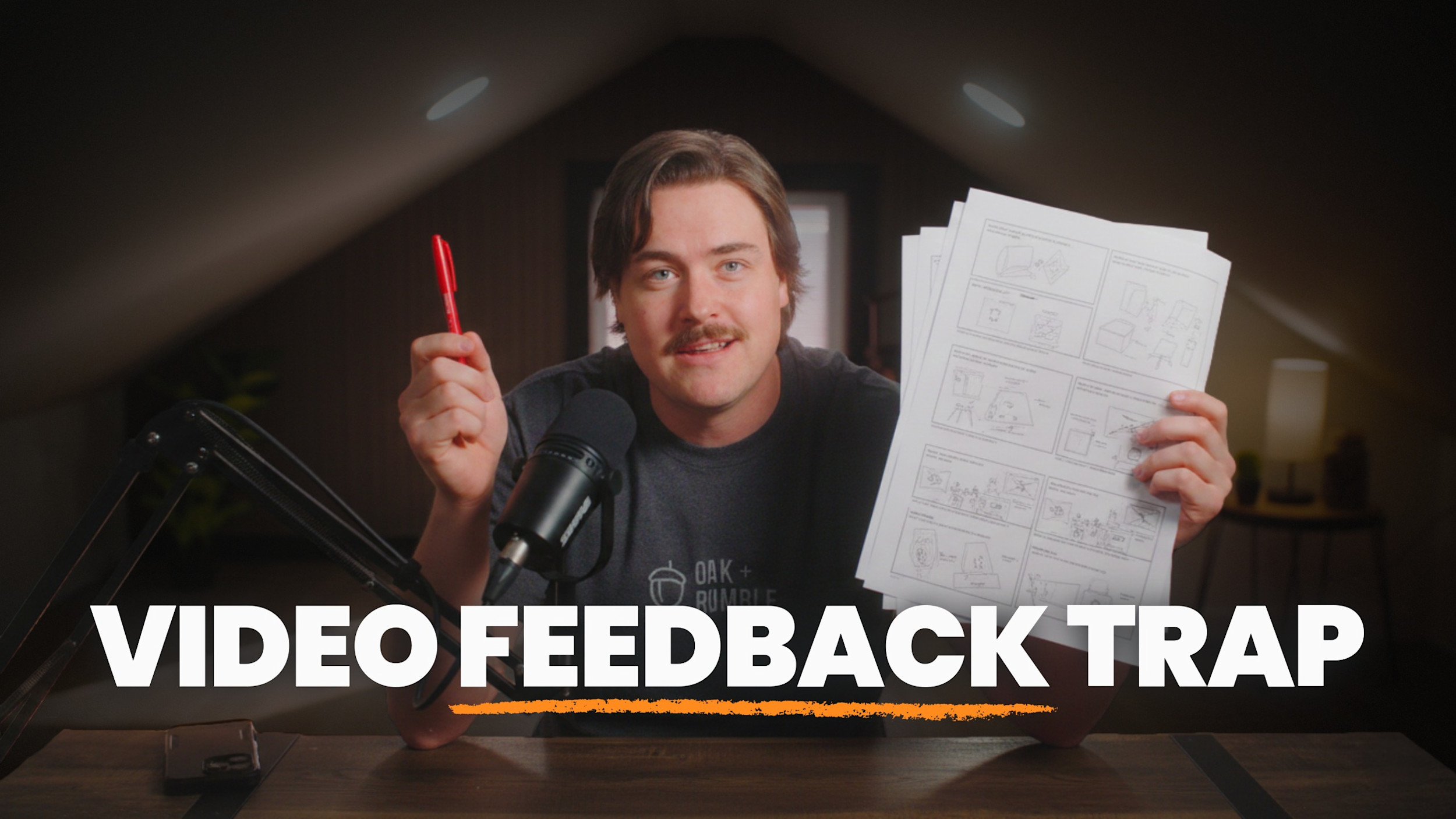
When leadership approves the structure before filming, the final review is usually a quick confirmation. (If you're newer to them, here's what a storyboard is and how it works.)
What the final review looks like instead
When leadership has already approved the concept, script, and storyboard, the final review changes:
Leadership knows what's coming
Your marketing team keeps its credibility
The production team works from a clear plan
The final review is a quick sign-off
Early buy-in helps you move faster, with fewer surprises. For finance and insurance marketing leaders, it's really about protecting the budget, your reputation, and the trust you've built internally. It's built into every step of our video production process. And when leadership finally sees the polished version, they get to see it at its best, and actually be impressed by it.
Find your own approval bottlenecks
If your team keeps ending up with multiple "final" versions, late notes from leadership, or budgets that creep, the fix is usually the approval workflow (and that part is very fixable). Our free assessment takes three minutes. It compares your team against other B2B finance and insurance teams and shows you where your approvals get stuck, so you can fix them before your next big campaign.
Take The 3-Minute Video Benchmark Assessment (free)
Still here? You’ve earned the full video transcript
I've learned the hard way: you should never show leadership the completed video first.
You probably think you're saving them time by waiting until the video is polished. But in reality, if leadership has feedback late in the game, it can cause a ripple effect of extra time and potential costs.
After 12 years of working with enterprise finance and insurance teams, we've seen that the smoothest projects aren't the ones with the fewest edits. They're the ones where the stakeholders were brought in at the right milestones. I'm going to show you exactly which milestones actually matter, so you can stop your projects from being derailed at the finish line.
Most video projects don't go over budget because of the production itself. They go over because of late-stage feedback. And when the first thing leadership sees is the completed video, they start looking for things to fix, because they haven't been a part of that journey.
What we consistently see work is securing buy-in on the major stages of pre-production early in the project: concept, script, storyboarding. When you align on the story and structure early, you're getting approval on the blueprint of the project, which makes the final review more of a formality.
In fact, we've found that showing leadership minor details like set design, background talent, or early edits in post-production can actually backfire. They shouldn't have to struggle through wireframe footage or temp music. Because they've already approved a storyboard, they know exactly what's coming. By protecting them from the back-and-forth of colour grades and sound design, you aren't just saving their time. You're ensuring that when they see that final, polished, finished version, they're actually going to be wowed by the result instead of exhausted by the process.
Early buy-in isn't about slowing things down. It's about how you move faster with fewer surprises. It makes leadership feel confident instead of surprised, and removes that awkward end-of-project conversation that can even put your reputation at risk.
This is very doable when you have the right process in place. If you're wondering where your own approval bottlenecks are, take our Video Benchmark Assessment. It only takes three minutes, and it compares your team to other enterprise teams in your industry. You'll get a benchmark score, and it'll show you exactly where your team is falling behind and how to fix those bottlenecks before the next big campaign.