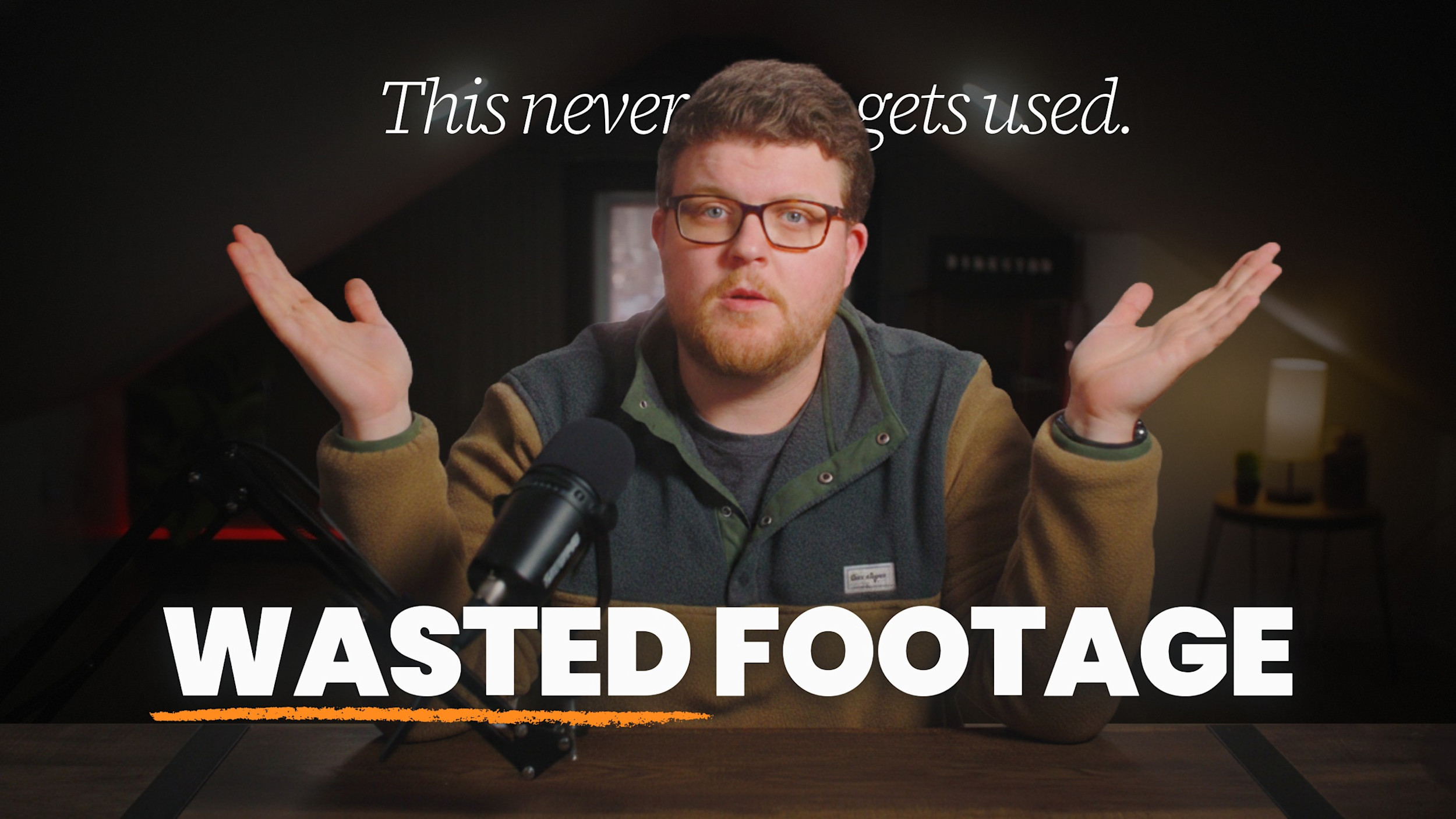

Most raw footage from a video shoot ends up on a hard drive and never gets used again. An interview shoot can capture hours of conversation, and the finished campaign video runs 60 to 90 seconds. Plenty of what's left over is good. It was just never planned to stand on its own. The fix happens before anyone hits record: decide which extra clips you want out of the shoot, add the questions that get them, and that same shoot day can fill a content calendar instead of a hard drive.
If you work in finance or insurance marketing, you know how much goes into an interview shoot. Executives get scheduled, messaging gets reviewed, compliance signs off, and you capture a few hours of genuinely thoughtful conversation. Then the campaign launches, and what everyone sees is one short film.
On a lot of our shoots, roughly 90% of the interview footage never makes the final edit. Which raises a fair question: was that 90% ever meant to be used? Usually, no.
Why most raw footage never gets used
Most raw footage goes unused because the shoot was planned around one video, and the edit only keeps what serves that one story. It's easy to assume the leftover sections were weaker, repetitive, or off-message. Sometimes they are. Often they're some of the best material from the day.
Interviews usually turn up far more good material than the main campaign needs. Executives explain complex financial ideas clearly. Subject matter experts share examples that make the whole thing more credible. Positioning statements come out naturally in conversation.
When the shoot is built around a single deliverable, the edit keeps whatever supports that one narrative, and everything else ends up in a folder with an optimistic name like "use later." The footage is perfectly usable. It just was never set up to stand on its own. That distinction matters, because it means the fix lives in planning.
The real constraint is access
In finance and insurance video production, the hardest thing to get is access, and gear and editing time come a distant second. Access to senior leaders. Access to subject matter experts. Access to messaging that's already made it through your approval process.
Lining all of that up can take weeks (anyone who's tried to get three executives into the same afternoon knows the feeling). When all that effort produces one video, you're getting a pretty thin return on everyone's time.
If the same filming window can produce several usable videos without adding cost or time, the whole project gets a lot more worthwhile. And that change starts in planning, well before anything lands in the edit suite.
Plan the extra clips before you film
Getting more out of an interview shoot starts with a small shift in how you define success. The campaign film still matters, but the shoot should also be judged by how many usable videos come out of it in total.
Before filming, decide which standalone pieces you'd reasonably want from the day. These might include:
Executive insight clips that get your positioning across
Educational explanations that make complex topics simple
Short clarifications that are already compliance-safe
Audience-specific statements you can share across different platforms
The key is that each one is planned to work on its own. These are complete ideas you set out to capture in the interview, so they hold up without the main film around them. Plan for that, and even a 20-minute executive conversation can produce several standalone clips alongside the flagship film.
All of this fits inside the production days you've already booked. What changes is how clearly the goals are set in pre-production.
What one shoot can give you
Once you treat leftover raw footage as a library you can draw from, a shoot day starts doing a lot more work. A single interview shoot can reasonably give you:
One main campaign film
Several standalone clips from executives or subject matter experts
Evergreen educational content
Versions built for each platform you post on
All from the same filming window you'd already booked.
For finance and insurance teams working with tight budgets and compliance review, that means less need to film again for every new request, less time pulling executives away from their day jobs, and a better return on the production budget you've already spent. It also changes how marketing is seen inside the company.
Why it makes marketing look good internally
Marketing leaders get judged on efficiency as much as creativity. Budgets need justifying, spending has to hold up to questions, and executive time has to be respected.
When one shoot produces a whole set of usable videos, it shows planning and foresight. It tells the rest of the company that marketing is building a system that gets the most out of every shoot, on top of producing great content. (It's also the kind of move that makes you look like the hero for finding "new" content without spending another dime on production.)
That 90% of raw footage sitting on a hard drive is unrealized potential until someone plans for it. Whether it becomes waste or a library comes down to what you decide before the cameras roll.
Assess your current video strategy
If you're not sure whether your production model is set up to get the most out of every shoot, our 3-minute Video Benchmark Assessment scores your team across strategy, production, and distribution. You'll get a tailored breakdown benchmarked against other finance and insurance marketing teams.
Take The 3-Minute Video Benchmark Assessment (free)
Still here? You’ve earned the full video transcript
Have you ever wondered what happens to the 90% of footage that doesn't make the final cut of your commercial or your brand film? Nothing. It usually just sits on a hard drive, which is a massive waste of budget.
In enterprise environments, we see teams capture hours of expert interviews just to distill it all down to a 90-second campaign video. But all that unused footage is still a goldmine of insights that most stakeholders never even see. Let me show you what to do with it.
Squeezing ROI out of a shoot starts in pre-production, not the edit suite. We treat this like a strategy by planning for standalone value before we hit record. Well, what does that mean?
Before any filming happens, we plan the extra assets we're looking to get out of the shoot. The question we ask ourselves is: how can we maximize value from the shoot without adding cost or time? Often what that looks like is tacking on a couple extra questions during an interview shoot that can be used as evergreen content later on.
Then, in post, we identify the 30-second clips that can drive traffic on their own. There's usually a ton of these, even more than we planned, because when interviews happen in a relaxed and comfortable manner, the volume of soundbites you can get from even a 20-minute interview is immense.
Then we add unique CTAs to each clip and ensure edits are created in platform-optimized versions of 9:16, 16:9, or 1:1.
This approach saves your team time. It saves your SMEs time and stretches the budget you already fought for. It's the kind of move that makes you look like the hero for finding new content without spending another dime on production.
If you aren't sure where your video strategy is losing ROI, you can take our three-minute benchmark assessment to see how your maturity stacks up against other finance and insurance teams. You'll get a video maturity score across strategy, production and distribution, and get a tailored plan that reveals your top growth opportunities. Link is in the post above or the description below.